
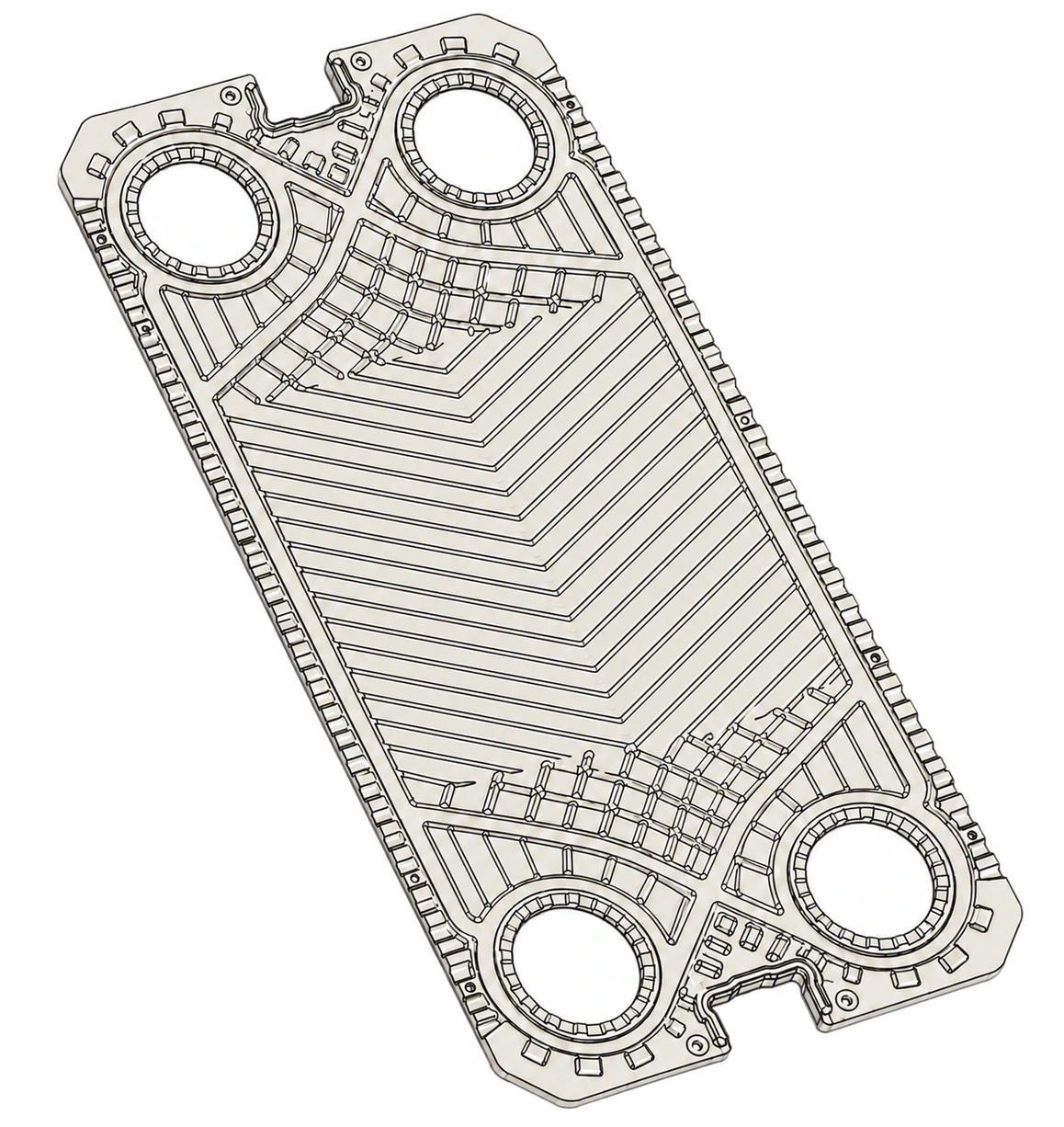
Plate & Frame and Brazed exchangers depend on their plate pack for actual thermal performance — the corrugation pattern, material, and thickness all directly determine how much heat transfer area and turbulence the unit delivers.
Replacing plates isn’t the simple like-for-like swap it looks like. Corrugation angle and chevron pattern vary between manufacturers, and even between product generations from the same manufacturer — a mismatched plate can quietly throw off thermal performance, or simply fail to seat correctly against the rest of the pack.
Plate material has to match your process fluid’s corrosion and temperature demands, not just the thermal duty. Standard duties are typically specified in SS304 or SS316; more aggressive chloride exposure or higher corrosion resistance requirements move the specification to Titanium Grade 1 (commercially pure titanium) or Grade 11 (a titanium-palladium alloy, offering enhanced crevice and general corrosion resistance over Grade 1 in the most aggressive chloride and reducing-acid environments); and the most demanding chemical or high-temperature services call for SMO 254 or Hastelloy C-276. Specifying a lower-grade material to save cost upfront is one of the more common ways plate exchangers fail early.
We help identify the correct plate specification — pattern, thickness, and material grade — for your installed unit, working from nameplate data, existing drawings, or a physical inspection where needed, and connect you with a supplier who can deliver plates that actually match your unit’s original design intent, not just its rough dimensions.